
Words by Paul Fellerman; all images © Noonans; banner design by Thibaut Degenne
During the interwar period, Art Deco medals became more than just commemorative objects—they were icons of modernity. With their sleek lines, geometric precision, and luxurious materials, these medals captured the spirit of an age obsessed with progress, travel, and technological advancement. These wonderfully crafted metal artefacts celebrated human achievement in an era defined by modern innovation and style.
In October 2025 Emma Bastin and Thibaut Degenne had the chance to meet Art Deco medal collector Paul Fellerman at the Isokon Gallery, London. In this fascinating article Paul explains where his collecting bug comes from; why he collected Art Deco medals and the growth and sale of his collection.
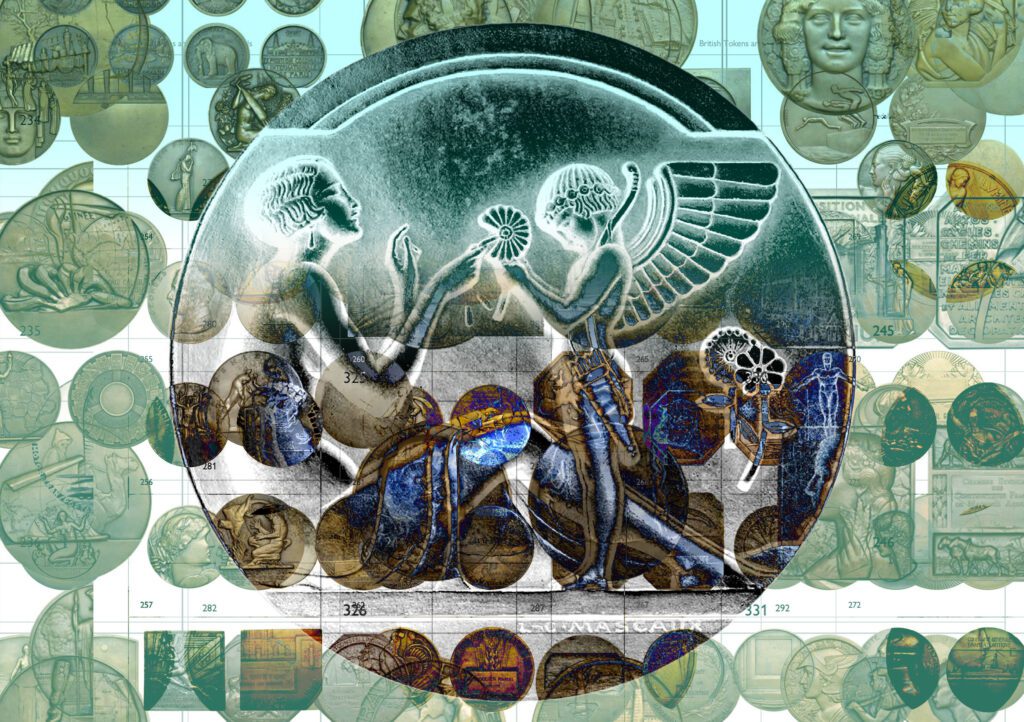
Being A Collector
When I was seven, I was hospitalized with a burst appendix. I cannot remember which visitor brought me a stamp album and a packet of stamps, but they got me started on a lifetime of collecting.
Being a collector is much more than owning things. Each area of interest takes you on a different journey and one can lead to another. Mine has been a solitary pursuit but the pleasure of collecting can also be very social if one joins a club of fellow collectors with an interest in common.
Whatever the chosen area, there is also an educational element as one researches and investigates whilst building the collection. With stamps I learnt about geography and with coins, history.
Collecting also develops alongside one’s own life journey and that of society in general. Fashions and what are politically acceptable changes too. My collection of antique ivory was disposed of years ago for example. Colonial Exhibition medals, whilst beautiful and relevant at the time, are no longer politically correct.
Another aspect to remember is that we are only ever “trustees” of our possessions and a time comes to de-accumulate and let others enjoy our collections. Hence, over the last few years I have either sold or given away some of my antiques, pictures, watches, clocks, Parker pens, vintage cameras & equipment, and Stock Exchange memorabilia.
Collecting Art Deco medals
Having long been a lover of Art Deco generally, I realized that these medals gave me an opportunity to celebrate the crossroads of art, history, and design. These small sculptural objects capture the spirit of the interwar years—bold geometry, streamlined forms, and a fascination with progress, sport, industry, and modern life. Unlike coins, Art Deco medals were conceived primarily as works of art. This gave medalists freedom to experiment with relief, typography, and abstraction.
I was at an antiques fair in 1995, and I saw a dealer with his table covered with various commemorative medals. On returning home I regretted not buying one I had seen. Its powerful image on both the obverse and reverse made a big impact on me. I tracked the dealer down and invited him to bring the Normandie medal and others to my house. I had bought my first Art Deco medal, and it commemorated the 1935 launch of the French liner Normandie. This was issued by Compagnie Générale Transatlantique.
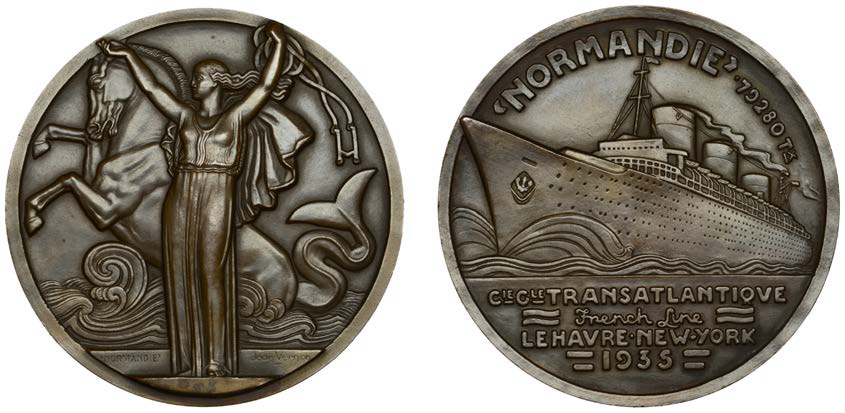
I bought it for £50, along with Centenaire du Rétablissement de L’Académie des Sciences Morales et Politiques (Centenary of the re-establishing of the Academy of Moral and Political Sciences) 1932 by Pierre Turin for £85; and what was always my favourite medal, Léda et Le Cygne (Leda & the Swan) 1925 (struck 1929) by Lavrillier for £100. In total £235 equivalent to £575 today. Clearly, I was hooked.
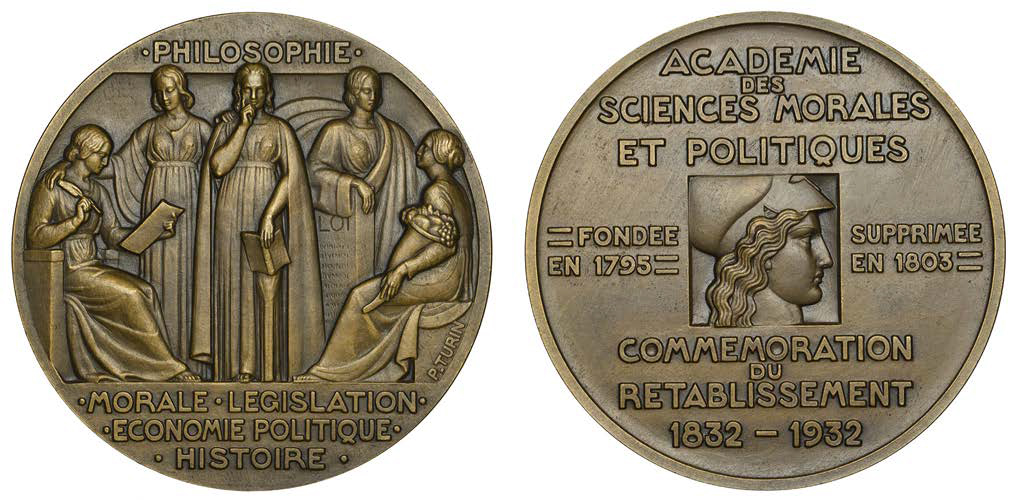
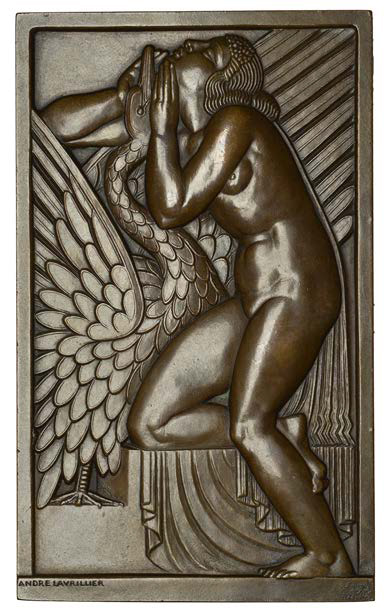
With these initial medals I had compressed into the palm of a hand, tactile references to modernity, social history and Greek mythology. I began to pursue other themes too. As a regular swimmer I was able to buy several that were either awarded medals or just to illustrate the 1920’s / 30’s focus on health, fitness and the development of lidos, which were often wonderful Art Deco venues themselves. Generally, medals on specific sports can be bought quite cheaply, something which those passionate about football, boxing or tennis will appreciate! For me, it was the Machine Age and modernity which caught my imagination and I was drawn to medals that illustrated industry and the new technologies like radio, cars and aviation.
It is worthwhile pointing out that I never considered collecting these as an investment. Of course, it’s gratifying to make a profit but doing so should not be the driver. I bought the last of my nearly two hundred medals in 2022. Once I had decided to sell them all, I chose to do so with Noonans Ltd in Mayfair, the specialist Numismatic auctioneers. It seemed that the 100th anniversary of the Paris Exhibition would be an ideal time for a sale. The collection was amassed over thirty years from dealers, antique fairs, auction houses and a great many on Ebay, but I wanted a one stop solution for the sale.
I attended the auction that took place in May 2025. I was disappointed as there was just one other person in the room – auctions are mainly carried out online these days! Interestingly, whilst I did make a 345% profit on those first three, overall, I lost 16%! The lesson here is that you make your money when you buy something well, not when you sell it. Only buy the best you can afford and dismiss poor quality, damage or re-strikes. Look for ones with attractive patina and dismiss those that have been polished.
The Normandie led to other ships having commemorative medals and the British 1936 Maiden Voyage of the RMS Queen Mary was celebrated in a medal by Gilbert Bayes. Three thousands of these were issued by the Royal Mint at 15 shillings (75p) each. In 1997, I paid £150 for mine, but in 2025 it sold for just £110 – a loss of 27%!
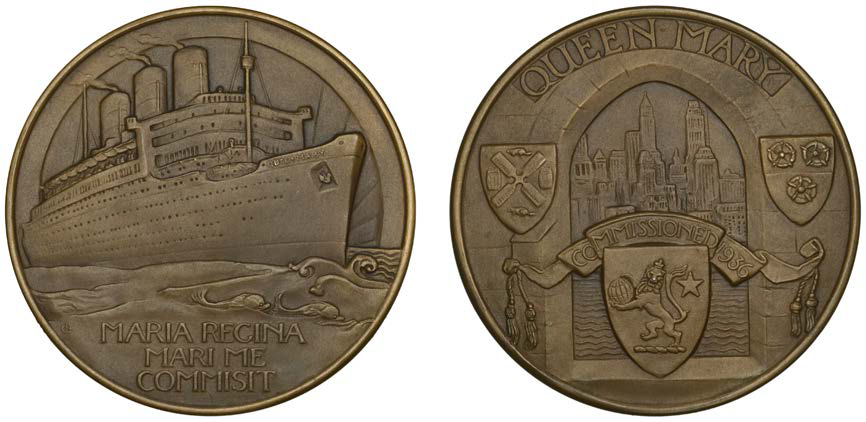
Many of the most sought-after pieces come from France and Belgium in the 1920s–1930s, where medallists such as Pierre Turin, André Lavrillier, Marcel Renard, and Alexandre Morlon translated avant-garde aesthetics into bronze and sometimes silver. Their medals often feature dynamic figures, sharp angles softened by elegant curves, and finely balanced compositions that feel both modern and timeless. I also had medals from America, Britain, the Netherlands, Switzerland, and Uruguay.
For collectors, the appeal lies in several layers:
- Artistic merit: Each medal is a miniature bas-relief sculpture, often signed by the artist.
- Historical context: Themes reflect the optimism, tensions, and technological ambitions of the period between the wars.
- Tactile intimacy: Medals are meant to be held, not just viewed—weight, size, patina, and surface detail matter.
- Accessibility: Compared to large sculpture or painting, ceramics, glass, bronzes and furniture, Art Deco medals offer an entry point into high-quality design at a more attainable scale and price.
- Commemorative: Celebrating significant events or anniversaries.
My whole collection was housed at home in bespoke collector’s cabinets. With nothing to fill them, I also sold these in the same auction.
On reflection, it would have been better to have concentrated on only the very best iconic medals like the most important ones I had. These are shown here:
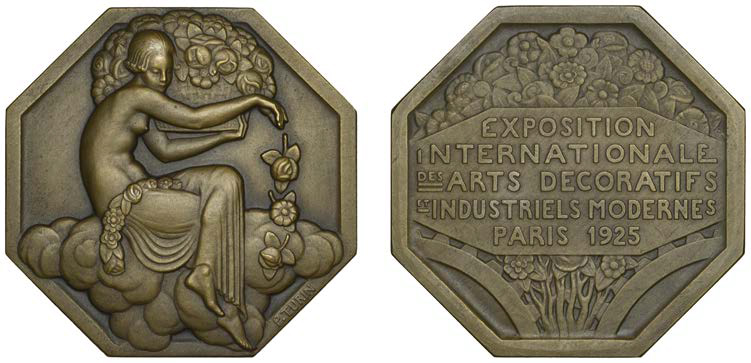
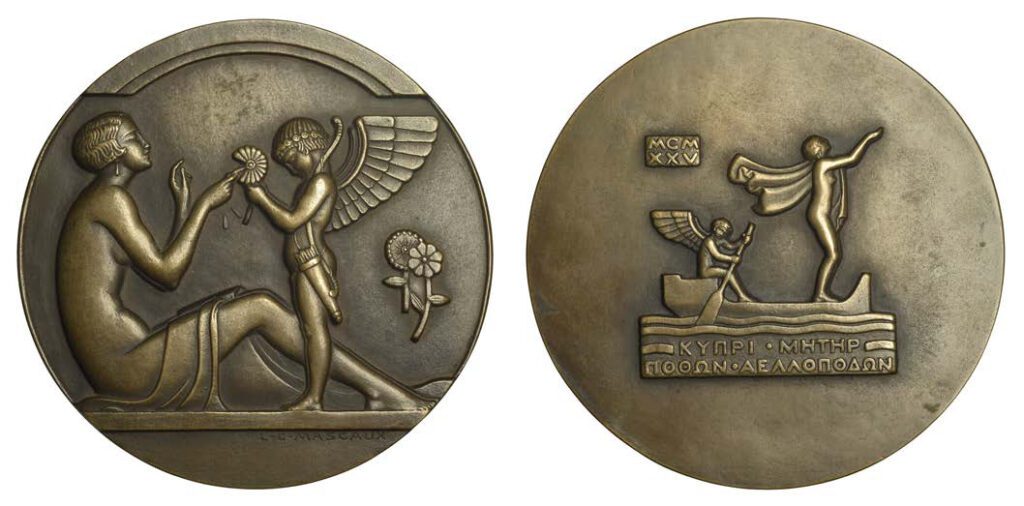
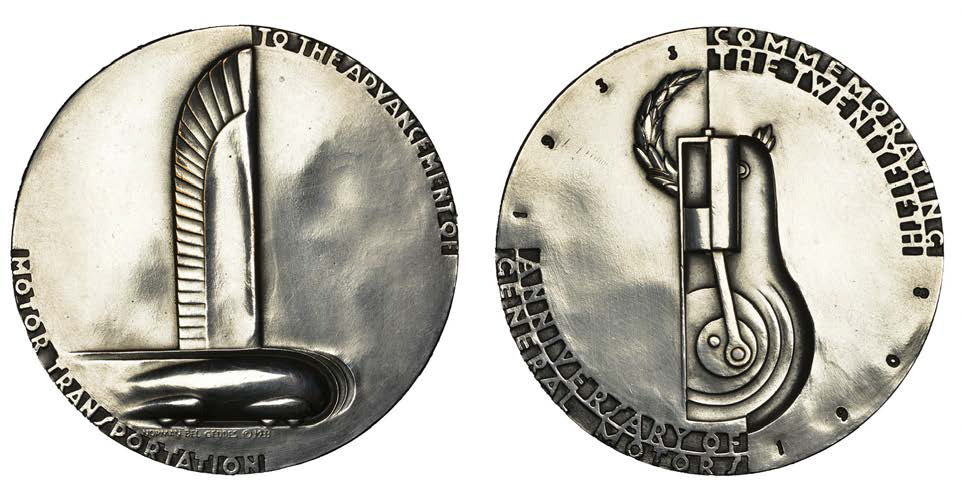
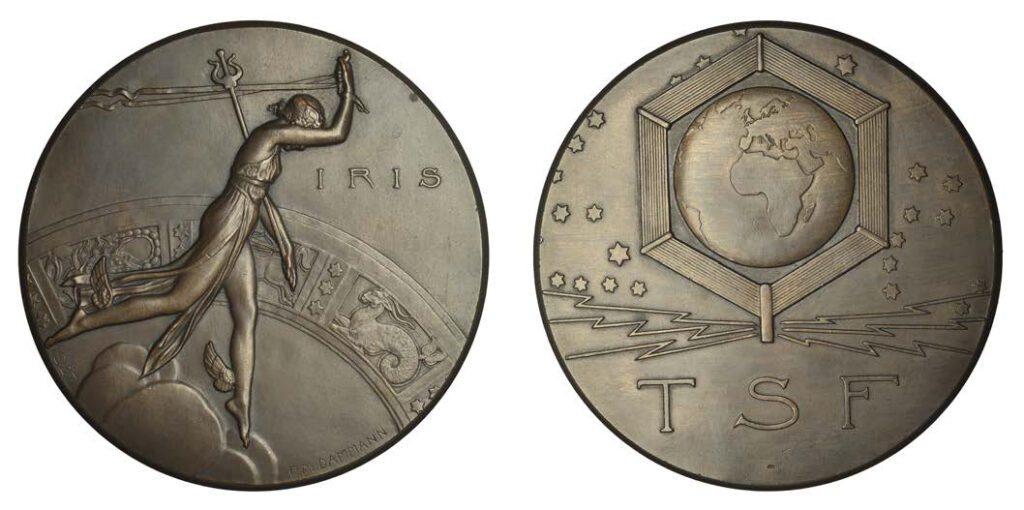

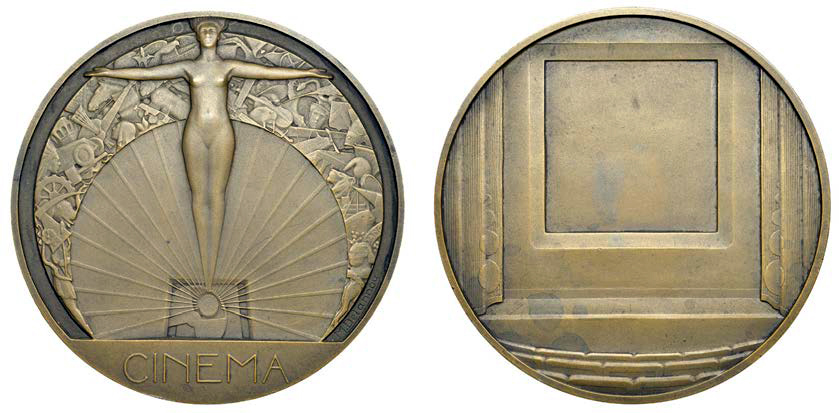
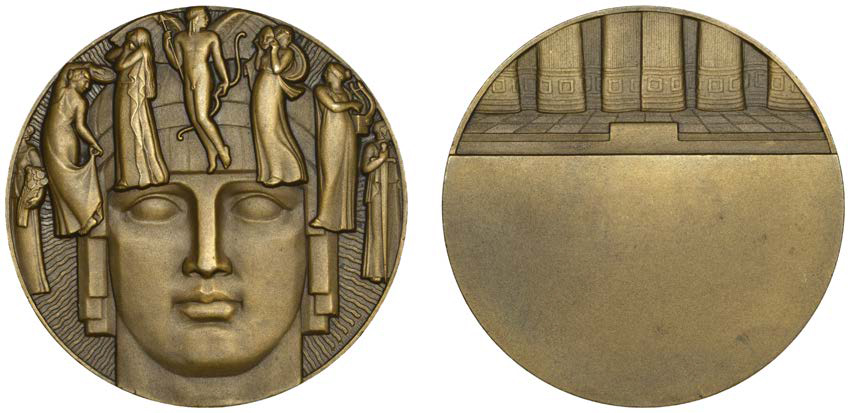
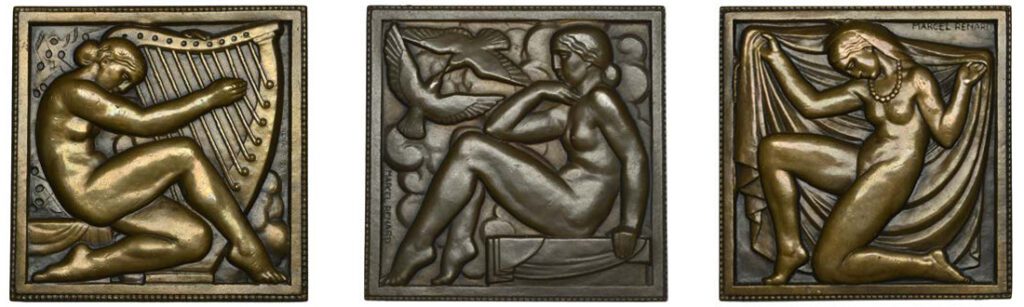
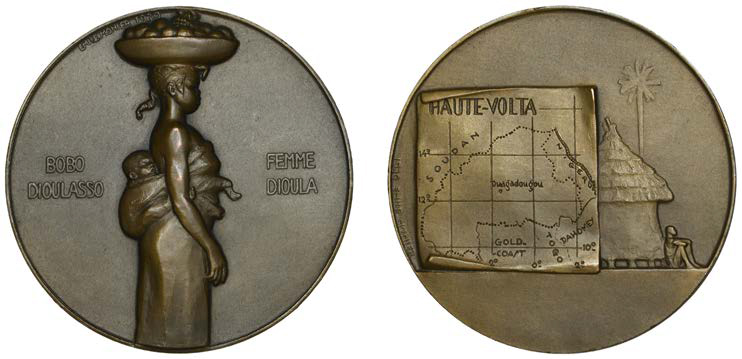
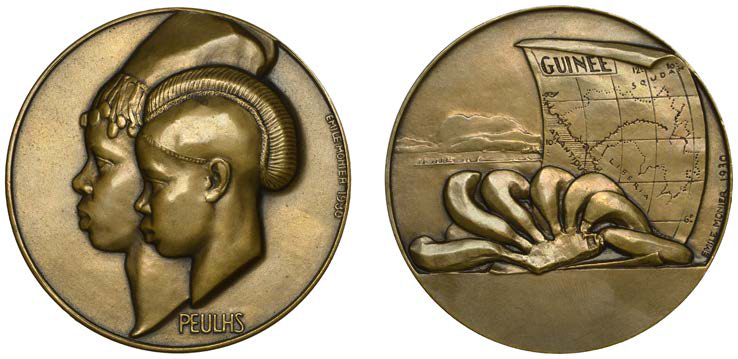
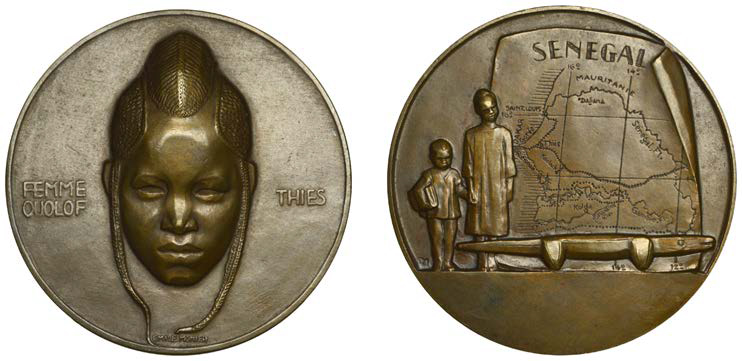
Below are a selection of Colonial medals, all struck for the 1931 Colonial Exhibition held in Paris.
From top: Niger, Haute Volta (Burkina Faso), Guinea, the Kingdom of Dahomey and Senegal.


Ultimately, collecting Art Deco medals is about preserving a moment when modernity was being invented in metal—where artistry, craftsmanship, and optimism were compressed into the palm of a hand.
About Paul Fellerman
Paul is lucky enough to own a “Minimum” flat in the grade 1 listed (Modernist not Art Deco) Isokon building in Hampstead. He has created his own micro museum and give tours on occasions during our open season. He volunteers in the Isokon Exhibition Gallery some Sunday mornings.
You can find out more here about this incredible building here: https://isokongallery.org
Many thanks to Noonans for allowing us to use their images from their auction catalogue. https://www.noonans.co.uk/